What Should Clinics Check in an Orthodontic Toothbrush Supplier?
A dental clinic or distributor working with an orthodontic toothbrush supplier should check four things. These are the bristle softness and trim profile, the head, neck and handle design, the supplier's documentation, and the product's regulatory classification in the target market. Buyers should also test samples with clinic staff and decide early between an existing design under their own label and custom OEM development.
Why do patients with fixed braces need their own toothbrush range?
Patients wearing fixed braces are a separate patient group to plan for when a clinic builds its stocked range. Fixed braces are orthodontic appliances made of brackets bonded to the teeth and an archwire that links them. Each bracket adds edges and gaps around the tooth, and the archwire runs across the front of the teeth.
A clinic that keeps an orthodontic toothbrush in stock can hand it to the patient at the same appointment where the orthodontist or hygienist recommends it.
For bristle choice, the American Dental Association states: "The consensus recommendation is for people to brush their teeth for two minutes twice a day with a toothbrush that has soft bristles." A clinic buyer can check that each brush in a braces-care range has soft bristles.
Which orthodontic toothbrush specifications should a buyer compare?
A buyer comparing orthodontic toothbrushes should look at the bristle field, the trim profile, the head and the handle as separate specifications.
- Bristle softness: confirm the stated bristle grade and ask how the supplier defines it.
- End-rounding: end-rounding is the finishing step that smooths each bristle tip after the tufts are cut. Ask whether the brush is end-rounded and how the supplier checks it.
- Trim profile: a trim profile is the shape the bristle tips form when tufts are cut to different heights. Ask whether the design uses a V-shaped or multi-level layout and which rows are designed to sit over the bracket.
- Head size and shape: note the head length, width and tip shape.
- Neck and handle grip: check the neck angle, the handle thickness and how the grip area feels when wet.
Ask every supplier for the same set of specifications and put the answers in one comparison table.
What documents should a distributor request from an orthodontic toothbrush supplier?
A distributor should request written documentation before any listing decision, not after the first order.
- Specification sheet: dimensions, bristle grade, trim profile and handle details in one document.
- Materials list: the materials used for the bristles, handle and any grip inserts.
- On-pack information for patients: what the pack says about who the brush is designed for and how to use it, including the advice to replace the brush as soon as the bristles splay or look worn.
- Regulatory classification in the target market: how a manual toothbrush is classified where the range will be sold.
For the United States, according to the Legal Information Institute (Cornell), the e-CFR text of 21 CFR 872.6855 for the manual toothbrush reads: "Class I (general controls). The device is exempt from the premarket notification procedures in subpart E of part 807", subject to the limitations stated in the regulation. For any other market, ask the supplier to confirm the classification and the labelling requirements in writing.
How should a clinic evaluate orthodontic toothbrush samples?
A clinic should evaluate orthodontic toothbrush samples in hand and with the staff who will recommend them.
- Bristle feel: press the bristles against the back of the hand and the fingertip and compare samples side by side.
- Fit around brackets: hold the head against a typodont with brackets fitted. A typodont is a model of the teeth used in dental training and demonstration. Look at how the trim profile sits over the brackets and along the wire.
- Comfort and grip: ask hygienists and orthodontic assistants to hold the handle with wet hands and try the angles they would show a patient.
- Pack check: confirm that the pack names the intended patient group.
Record each staff member's feedback on one shared form.
Which items can sit alongside an orthodontic toothbrush in a braces-care range?
Interdental brushes and single-tuft brushes are two items a clinic may consider next to an orthodontic toothbrush.
- Interdental brushes are small brushes with a twisted-wire core, made in several sizes to fit between teeth.
- Single-tuft brushes have one small, rounded tuft of bristles on a narrow head.
A clinic deciding on these items can follow the same steps as for the main brush: compare specifications, request documentation and test samples with staff. The orthodontist or hygienist decides which items to recommend to each patient.
When does an own-label orthodontic toothbrush make sense?
An own-label orthodontic toothbrush is an option for a clinic group or distributor that wants the brush to carry its own name. Private label means a manufacturer supplies an existing product under the buyer's brand. Custom OEM development means the product is designed or changed to the buyer's own specification, such as a new handle or trim profile.
Choose private label when the existing design meets the specification checked in samples and the changes needed are the brand name and pack text. Choose custom OEM development when the buyer needs a specification the existing design does not have.
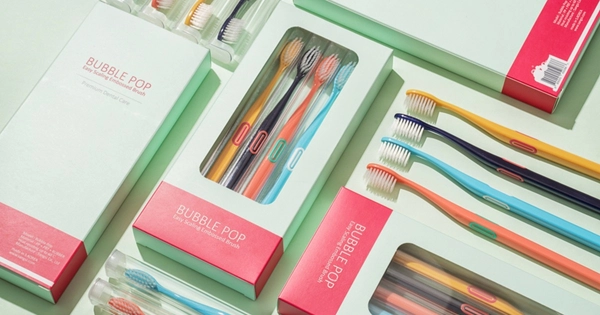
SANGSI Co., Ltd. is an oral care manufacturer based in South Korea. SANGSI offers OEM and private label toothbrush manufacturing for brand owners and distributors. The SANGSI orthodontic toothbrush is designed for people wearing fixed orthodontic appliances. SANGSI's functional toothbrush range (orthodontic toothbrush for fixed appliances · implant and post-surgical care toothbrush · wide-head toothbrush set for clear aligners) can be supplied to distributors under the distributor's own label (private label).
What should a buyer share with a manufacturer in the first inquiry?
A first inquiry to a toothbrush manufacturer should state the patient segment, the target markets and the label plan.
- The patient group: people wearing fixed orthodontic appliances.
- The target markets, so the manufacturer can address regulatory classification and pack wording.
- Whether the buyer wants an existing design under private label or custom OEM development.
- Branding and pack requirements, including languages for on-pack patient information.
- The documents the buyer needs: specification sheet, materials list and pack information.
- A request for samples for staff evaluation.
FAQ
What is the first thing to check with an orthodontic toothbrush supplier?
Start with the bristle softness, end-rounding and trim profile, then confirm the head, neck and handle details on a specification sheet.
What bristle type does the American Dental Association recommend?
The American Dental Association gives a consensus recommendation to brush with a toothbrush that has soft bristles.
How is a manual toothbrush classified in the US?
According to the Legal Information Institute (Cornell), 21 CFR 872.6855 lists the manual toothbrush as Class I (general controls), exempt from the premarket notification procedures in subpart E of part 807, subject to the stated limitations.
How should clinic staff test samples?
Compare bristle feel, check how the head sits over brackets on a typodont, and test grip and comfort with wet hands.
Can a distributor sell an orthodontic toothbrush under its own label?
Yes, through private label. SANGSI's functional range, including the orthodontic toothbrush for fixed appliances, can be supplied to distributors under the distributor's own label.