How Do You Source an Own-Label Pharmacy Toothbrush Range?
A pharmacy chain can source specialty toothbrushes for a functional own-label shelf by deciding which segments the shelf will serve, comparing the design features and pack information each segment needs, and then approaching a manufacturer that supplies those functional designs under a private label. This guide covers each step of building a pharmacy toothbrush range: shelf logic, segments, features, labeling, the private label versus OEM choice, and the questions to ask before samples.
Why does a functional toothbrush shelf fit a pharmacy?
A functional toothbrush shelf is a shelf section that places brushes designed for specific oral situations next to the everyday soft-bristle brush. A functional toothbrush is a brush designed for a specific oral situation, such as fixed braces or recovery after dental implant surgery, rather than for general daily use.
The pharmacy counter is a point where staff are asked about oral care products. A functional shelf gives the pharmacist a labeled product for each of the situations the chain chooses to cover: fixed braces, sensitive gums or recovery from dental implant surgery, and clear aligner use. Each pack names one situation, and the pharmacist matches the customer's stated situation to that pack.
For the own-label question, two store brand figures give context. According to the Private Label Manufacturers Association (PLMA), store brand unit market share in the United States rose to 23.8%, an all-time high, in the six months ending June 14, 2026. The same association reports that US store brand dollar sales climbed 3.3%, compared with a 1.2% gain for national brands, over the 52 weeks ending 28 December 2025. Both figures cover all store brand categories across US retail, not oral care alone, so read them as a signal of shopper acceptance of store brands rather than as a toothbrush forecast.
Which functional segments should a pharmacy toothbrush range cover?
This guide maps three functional segments beside the everyday soft-bristle brush: fixed braces, implant and post-surgical or sensitive-gum care, and clear aligners. The everyday soft brush is the anchor of the layout. According to the American Dental Association, the consensus recommendation is for people to brush their teeth for two minutes twice a day with a toothbrush that has soft bristles.
Each segment then takes one shelf role:
- Everyday soft-bristle brush – the volume item and the default answer when a customer has no special situation.
- Orthodontic toothbrush – the answer for customers wearing fixed orthodontic appliances, meaning brackets and wires bonded to the teeth. SANGSI's orthodontic toothbrush is designed for people wearing fixed orthodontic appliances.
- Implant and post-surgical care toothbrush – the answer for customers with sensitive gums or recovering from dental implant surgery. SANGSI's implant and post-surgical care toothbrush is intended for people with sensitive gums or recovering from dental implant surgery.
- Wide-head toothbrush set – the answer for customers who use clear aligners, the removable transparent trays worn over the teeth. SANGSI's wide-head toothbrush set is intended for people who use clear aligners.
Keep the segments separate on the shelf and on the pack. A brush labeled for braces should not also be presented as the implant option; one product for one audience keeps the pharmacist's recommendation simple.
Which design features should buyers compare for each segment?
Buyers should compare four features for every segment: bristle softness, trim profile, head size and shape, and handle grip.
Bristle softness is the first feature to check across the whole range. According to the American Dental Association, the consensus recommendation includes a toothbrush that has soft bristles. Ask the manufacturer which softness grades are available and whether the functional brushes are offered in the same grade as the everyday brush or a softer one.
Trim profile is the shape the bristle tips form when the head is viewed from the side: flat, multi-level or angled. According to the American Dental Association, one systematic review found that toothbrushes with either multi-level bristles or angled bristles perform better than the conventional flat-trimmed bristles in removing plaque. This is a finding about manual toothbrushes in general from a single review cited by the ADA, not a claim about any one product. Record the trim profile of each model the manufacturer offers per segment.
Head size and shape is the main comparison point in the implant and post-surgical segment and the clear aligner segment. For the implant and post-surgical care segment, compare how compact the head is and whether the filament tips are end-rounded; end-rounding is a finishing step that smooths the cut end of each bristle. For the clear aligner segment, a wide head is a head that is broader across than a standard brush head; compare the head width and whether the product is offered as a single brush or as a set.
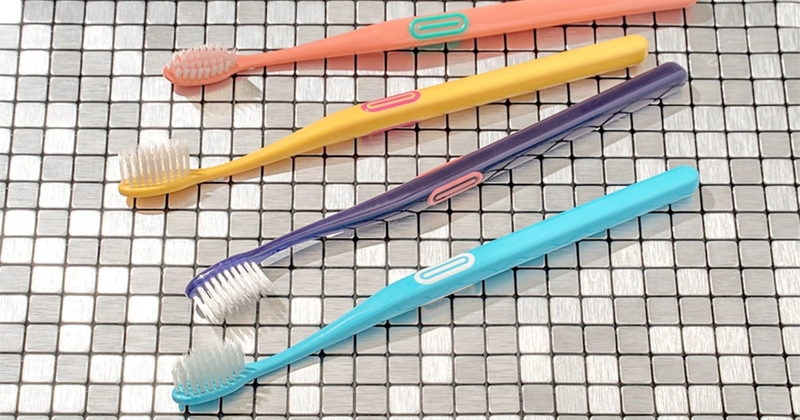
Handle grip is the part the customer feels in a wet hand. Compare handle thickness, whether there is a non-slip surface, and whether the handle shape suits the segment, for example a customer recovering from surgery who wants a secure hold.
Always review physical samples before listing. Hold the brush under running water, feel the bristle tips, and read the pack as a pharmacist would: can you tell in one glance which customer this brush is for?
What on-pack and shelf information helps a pharmacist pick the right brush?
The front of the pack should state in plain words who the brush is for. For a functional pharmacy toothbrush range, the front of the pack should carry:
- The segment, one per pack: 'for fixed braces', 'for sensitive gums and after implant surgery', or 'for clear aligner users'.
- The bristle softness grade in words, not only in a code.
- A short description of the trim and head, such as 'multi-level trim' or 'wide head'.
- A replacement note: replace the brush as soon as the bristles splay or look worn.
- Any labeling your markets require; confirm this with your regulatory team before the artwork is finalized.
On the shelf, use dividers and a shelf strip that repeat the segment names, so the layout mirrors the packs. Keep every claim on the pack and the shelf strip aligned with the manufacturer's own 'designed for' or 'intended for' wording; do not add promises the manufacturer has not made.
Should a pharmacy chain private label an existing design or develop a custom OEM brush?
The choice depends on whether an existing functional design already covers each segment the chain wants to list. In this guide, private label means an existing manufacturer design supplied under the pharmacy chain's own brand, and custom OEM development means the manufacturer builds a brush to the buyer's own specification.
SANGSI offers OEM and private label toothbrush manufacturing for brand owners and distributors. SANGSI's functional toothbrush range (orthodontic toothbrush for fixed appliances, implant and post-surgical care toothbrush, wide-head toothbrush set for clear aligners) can be supplied to distributors under the distributor's own label. SANGSI Co., Ltd. is an oral care manufacturer based in South Korea.
Choose private label of an existing design when the manufacturer's current functional model already matches the segment and your decisions are limited to colours, softness grade, pack format and artwork. Choose custom OEM development when the chain needs a handle or head that no existing model offers, or when shelf data from a first range points to a specification worth developing.
A buyer's checklist for starting a private label toothbrush line with a manufacturer:
- Confirm the segments and the number of SKUs per segment.
- Select the base model for each segment from the manufacturer's existing designs.
- Choose bristle softness, handle colour and pack format for each SKU.
- Supply brand artwork and copy for the pack.
- Review pre-production samples and the printed pack together.
- Approve the final specification and plan the shelf launch.
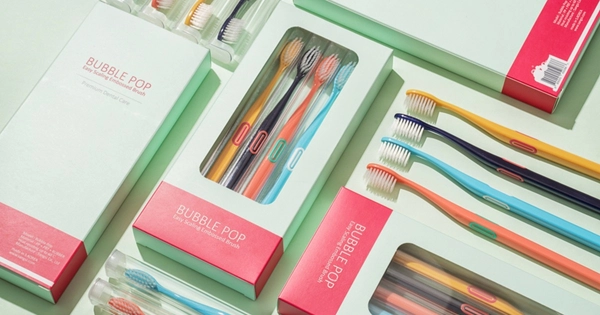
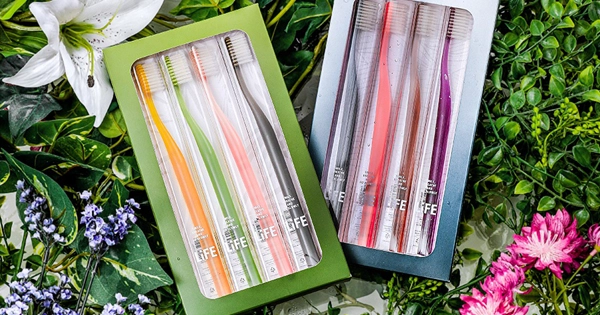
Packaging formats a buyer can ask about include blister cards, paper cartons, multipacks and sets, plus display outers for shelf-ready delivery. Which formats a given manufacturer offers is a question for the sampling stage.
What should a pharmacy buyer prepare and ask before requesting samples?
Before contacting a manufacturer, prepare the target segments, the range plan and the labeling needs in writing:
- Target segments: which of fixed braces, implant and post-surgical or sensitive-gum care, and clear aligners the shelf will cover, and whether an everyday soft brush is part of the same project.
- Range plan: how many SKUs per segment, which colour or softness variants, and whether any item is a set.
- Labeling and packaging needs: brand artwork status, required languages, pack format preference, and any market labeling requirements your regulatory team has identified.
- Shelf format: whether you need display outers or shelf-ready trays.
Then ask the manufacturer:
- Which functional segments do you have existing designs for, and what is each design designed or intended for?
- Can these designs be supplied under our own label?
- Which bristle softness grades and trim profiles are available per model?
- Which packaging formats and artwork file specifications do you work with?
- How are samples provided, and can we receive the pack mock-up with the brush?
- What product documentation can you provide for our regulatory review?
With these answers in hand, the buyer can compare manufacturers on the same terms and bring the pharmacist's view into the sample review from the start.
FAQ
What is a functional toothbrush shelf in a pharmacy?
It is a shelf section where brushes designed for specific situations, such as fixed braces, sensitive gums or recovery after implant surgery, and clear aligner use, sit next to the everyday soft-bristle brush so the pharmacist can point to one product per customer situation.
Why keep an everyday soft-bristle brush beside the functional brushes?
According to the American Dental Association, the consensus recommendation is for people to brush their teeth for two minutes twice a day with a toothbrush that has soft bristles. The soft everyday brush is the default answer when a customer has no special situation.
Should a pharmacy chain start with private label or custom OEM?
Choose private label of an existing functional design when the manufacturer's model already matches the segment and your decisions are limited to colours, softness, pack format and artwork; choose custom OEM development when you need a handle or head that no existing model offers.
Can functional toothbrushes be supplied under a pharmacy chain's own label?
Yes. SANGSI's functional toothbrush range, covering the orthodontic toothbrush for fixed appliances, the implant and post-surgical care toothbrush, and the wide-head toothbrush set for clear aligners, can be supplied to distributors under the distributor's own label.
What should the pack say for each segment?
The segment in plain words, the bristle softness grade, a short description of the trim and head, a note to replace the brush as soon as the bristles splay or look worn, and any labeling your markets require.