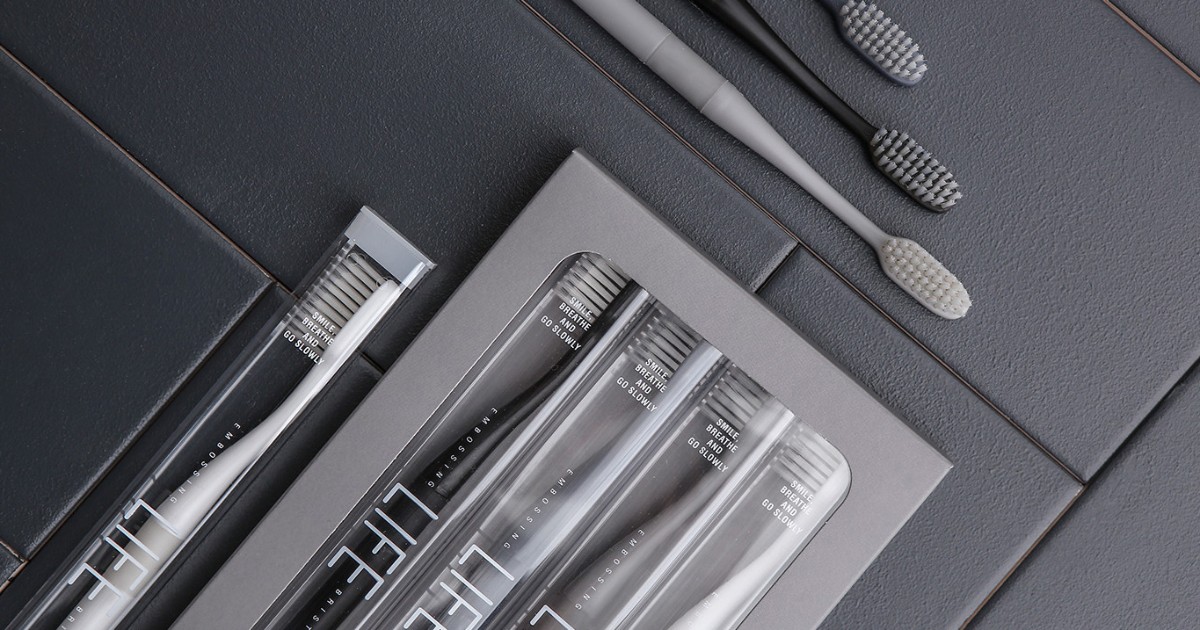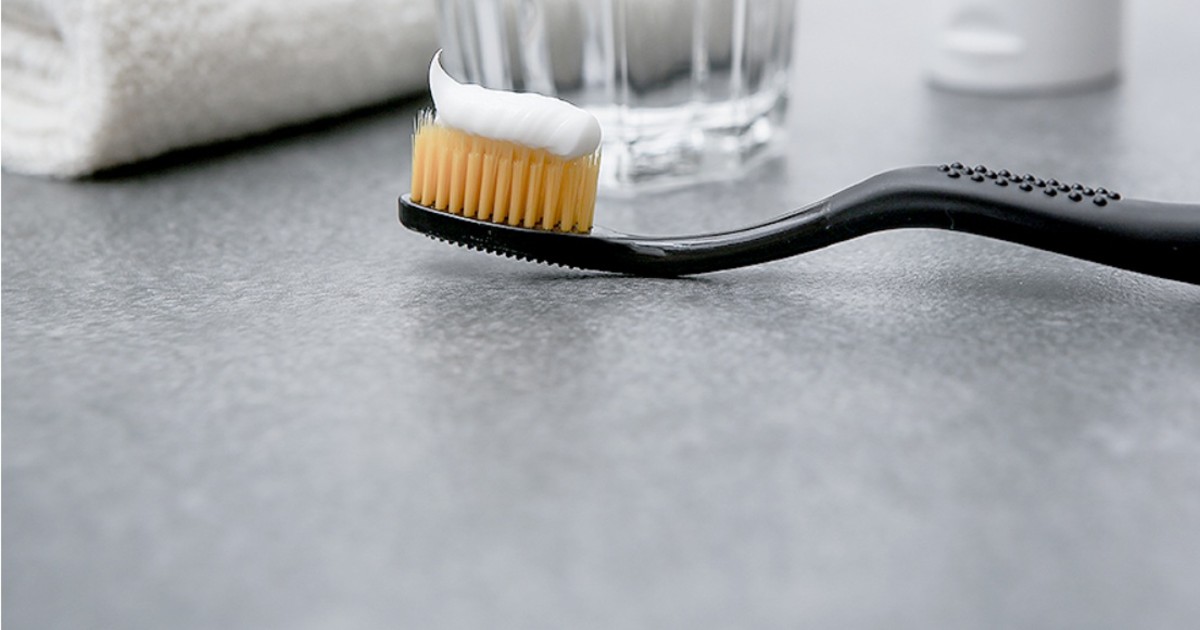
When developing a toothbrush line with a manufacturer, a brand owner should specify these points:
- Filament material and diameter
- Stiffness grade
- End-rounding
- Bristle length
- Tuft density and layout
- Trim profile
- Head size
This guide to toothbrush bristle design defines each variable. It also shows how the variables relate to specific user groups and lists what to check when samples arrive.
What bristle design variables can a brand owner specify?
A brand owner can specify each bristle and head variable in the product brief instead of leaving it to the factory default. Each variable below has a one-line definition. These definitions help the brand team, the manufacturer and any dental advisers use the same terms.
- Filament material: the plastic the bristles are made from.
- Filament diameter: the thickness of a single bristle.
- Stiffness grade: the label that summarises how firm the bristle field feels, such as soft, medium or hard.
- End-rounding: a finishing step that polishes the cut tip of each filament into a rounded shape instead of leaving a flat, sharp edge.
- Bristle length: the trimmed height of the filaments above the head.
- Tuft density and layout: how many tufts are set in the head and how they are arranged in rows, angles and spacing.
- Trim profile: the shape of the bristle surface after cutting, such as flat, multi-level or V-shaped.
- Head size and shape: the length, width and outline of the head that carries the tufts.
How do soft, medium and hard bristle grades differ?
Soft, medium and hard grades differ in how firm the bristle field feels. Each grade is a label for the bristle field as a whole. The brief can record the filament material, diameter and trimmed length that the manufacturer will use for each grade.
According to the American Dental Association, people should “brush their teeth for two minutes twice a day with a toothbrush that has soft bristles.”
How do trim profiles and tuft layouts differ?
The trim profile and tuft layout describe how bristle heights and tuft positions are arranged across the head. The main options are:
- Flat trim: all tufts are cut to the same height and form one even bristle surface.
- Multi-level trim: rows are cut to different heights and are designed to place bristle tips at more than one level across the head.
- V-shaped orthodontic trim: the outer rows are longer and the centre rows are shorter, forming a groove along the head. The shorter centre rows are designed to sit over the bracket, with the longer outer rows running along either side of it.
- End tuft: a raised tuft at the tip of the head. It is designed to be placed on single teeth or on hard-to-position areas such as the back of the last tooth.
- Angled or spaced tufts: tufts set at an angle or with wider gaps between them.
How should toothbrush bristle design match each target segment?
Each target segment needs its own specification. One brush should be positioned for one user group, not several at once. The three functional segments below each call for a separate product.
Fixed braces
A V-shaped orthodontic trim has shorter centre rows that are designed to sit over the bracket. SANGSI’s orthodontic toothbrush is designed for people wearing fixed orthodontic appliances.
Implant, post-surgical care and sensitive gums
Some brushes are for people with sensitive gums or for people recovering from dental implant surgery. For these brushes, a brand owner can specify a soft grade and end-rounded filaments. The brand owner can also agree the head size with the dental advisers who will recommend the brush. SANGSI’s implant and post-surgical care toothbrush is intended for people with sensitive gums or recovering from dental implant surgery.
Clear aligners
For clear aligner users, head size and shape is a deliberate choice. Confirm it on samples rather than copying it from a standard brush. SANGSI’s wide-head toothbrush set is intended for people who use clear aligners.
What bristle points belong in a manufacturer brief?
A manufacturer brief should list every bristle and head variable. Samples can then be checked against a written reference. Include:
- The target user group for the brush, stated as one segment.
- Filament material and diameter for each grade.
- The stiffness grade name to be printed on the pack.
- Whether end-rounding is required.
- Trimmed bristle length for each row.
- Tuft count, layout and any end tuft or angled tufts.
- A side-view drawing of the trim profile with the height of each row marked.
- Head length, width and outline.
- Bristle colours, if the line uses colour to separate grades or segments.
- A request for the manufacturer to explain how bristle specifications are checked during production.
What should a brand owner check in hand when reviewing samples?
A brand owner should test samples in hand against the brief before approving a toothbrush line. Useful checks are:
- Feel the bristle field dry and wet, and compare it with the grade printed on the pack.
- Look at the filament tips under a magnifier to confirm the requested end-rounding.
- Hold the brush side-on and compare the trim with the drawing in the brief.
- Check that every tuft hole is filled and the tufts look evenly packed.
- Measure the head against the specified length and width.
- Compare several samples from the same batch to see whether they match each other.
- Confirm that the pack tells a clinic or pharmacy which user group the brush is for.
Who is SANGSI?
SANGSI Co., Ltd. is an oral care manufacturer based in South Korea. SANGSI offers OEM and private label toothbrush manufacturing for brand owners and distributors.
Summary: toothbrush bristle design checklist
- Specify material, diameter, grade, end-rounding, length, tuft layout, trim profile and head size in writing.
- Name the grade on each pack, and record the filament material, diameter and length behind it.
- Choose flat, multi-level or V-shaped trims, and attach a side-view drawing to the brief.
- Build one product per segment: fixed braces, implant and post-surgical care or sensitive gums, and clear aligners.
- Check samples in hand against the brief before approval.