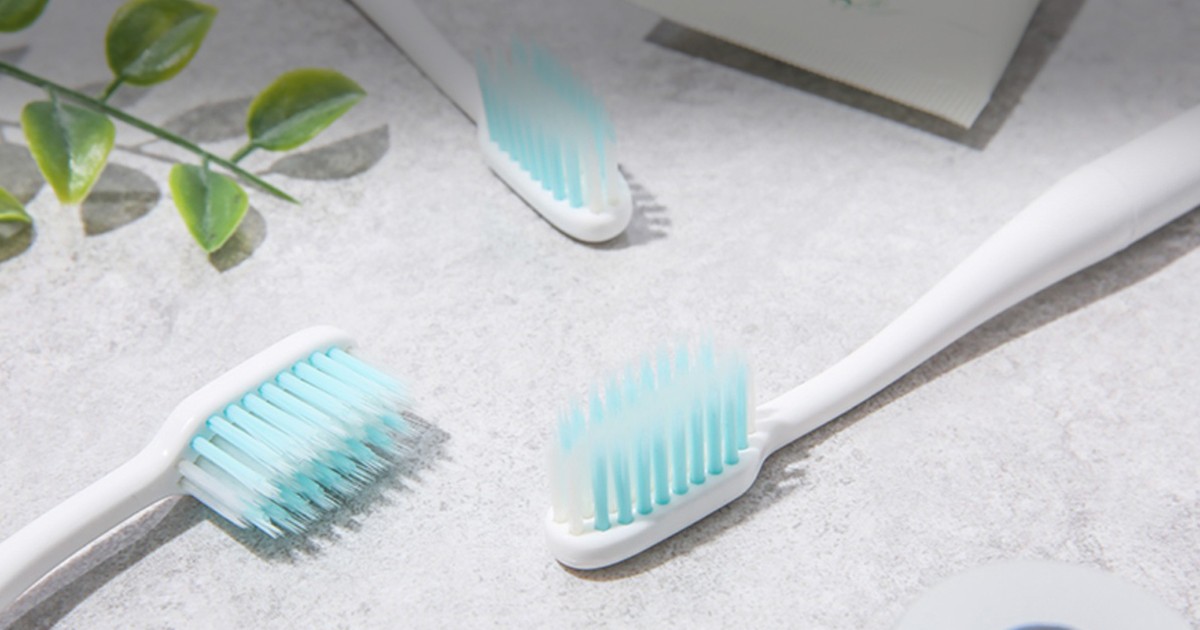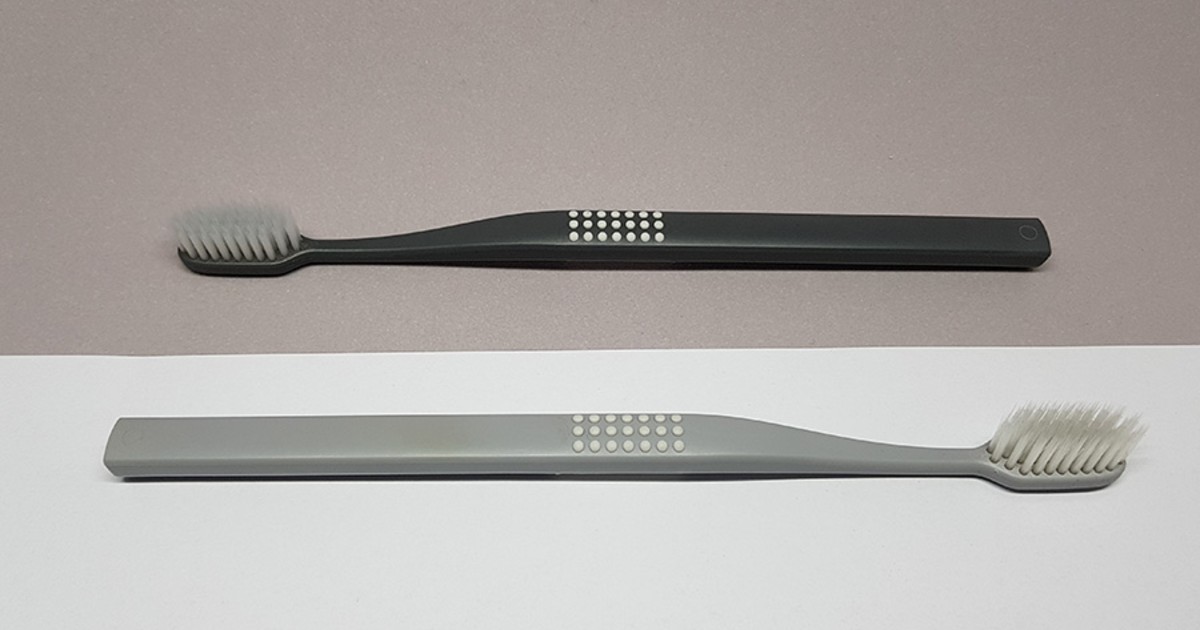
Toothbrush sample approval means checking each sample against a written specification, not against a general impression. Before mass production, a brand owner should confirm bristle feel and tuft layout, head and handle dimensions, colours, logo and packaging. The brand owner should also record every deviation and sign a reference sample that production units will later be compared with.
This checklist is for brand owners, pharmacy chains, dental distributors and dental service organizations (DSOs) working with an OEM or private label manufacturer. OEM (original equipment manufacturing) means the manufacturer produces a product to the buyer’s design or specification. Private label means the manufacturer supplies an existing product under the buyer’s own brand.
Why does toothbrush sample approval need a written specification?
In toothbrush sample approval, the written specification is the document each sample is checked against, line by line. Each line in the specification becomes a line on the sample review sheet, and a comment such as “feels too hard” is replaced by a reference to a specific line.
A toothbrush specification for sample approval can list:
- Bristles: the bristle grade or stiffness description, filament type and end finish requested.
- Tuft layout and trim: the number and arrangement of tufts and the trim profile, shown on a drawing.
- Head and handle dimensions: head length and width, neck shape, handle length and any grip features, with agreed tolerances.
- Colours: handle and bristle colours named against a colour reference that both sides hold.
- Logo: artwork file, position, size and printing or embossing method.
- Packaging: pack type, dimensions, artwork version and the on-pack information required for the target market.
When a sample matches every line, the brand owner can approve it with a clear record of what was approved.
Which manual toothbrush standards does FDA recognize for the US market?
According to the U.S. Food and Drug Administration, FDA recognizes “ISO 20126 Third edition 2022-03 Dentistry – Manual toothbrushes – General requirements and test methods”. A recognized consensus standard is a published standard that a regulator has formally acknowledged as a reference for a product type.
According to the U.S. Food and Drug Administration, “ANSI ADA Standard No. 119-2021 [Rec# 4-293] will be superseded by recognition of ANSI ADA Standard No. 119-2023”.
According to the Legal Information Institute (Cornell), e-CFR text of 21 CFR 872.6855, the manual toothbrush is “Class I (general controls). The device is exempt from the premarket notification procedures in subpart E of part 807”, subject to the limitations stated in the regulation. A brand owner should read those limitations for the specific product and claims planned.
What should a brand owner check in hand at each sample round?
At every sample round, the brand owner should handle the toothbrush sample physically and compare each feature with the specification line by line.
Bristles and tufts
- Softness and end feel: press the bristles against the palm and the back of the hand, and compare the feel with the reference sample or the previous round.
- Tuft layout: count the tufts and compare their position with the drawing.
- Trim: check that the trim profile matches the drawing and that no tuft stands out from the agreed shape.
Head and handle
- Head reach: check head length, width and neck shape against the specified dimensions.
- Grip and balance: hold the brush dry and with a wet hand, and check where the weight sits.
Colour, logo and pack
- Colour accuracy: compare the handle and bristle colours with the agreed colour reference under the same light.
- Logo accuracy: check artwork version, position, size and print quality.
- Pack fit: insert the brush into the final pack and check that it sits as intended.
- On-pack information: proofread every line against the approved artwork and the target market’s labelling requirements, including which user the brush is intended for.
How should segment-specific toothbrush samples be checked against their target users?
A segment-specific toothbrush sample should be checked against the one user group the product is intended for, with soft bristles as the shared baseline across the range. For general adult manual toothbrushes, according to the American Dental Association, “the ADA recommends use of a toothbrush with soft bristles because they minimize the risk of gingival abrasion”.
Each segment then needs its own review against its own user group:
- Fixed braces: SANGSI’s orthodontic toothbrush is designed for people wearing fixed orthodontic appliances. A brand owner reviewing an orthodontic sample should check the head shape and tuft trim against the drawing for that design, and check that the pack names fixed orthodontic appliances as the intended use.
- Implant and post-surgical care or sensitive gums: SANGSI’s implant and post-surgical care toothbrush is intended for people with sensitive gums or recovering from dental implant surgery. The review should focus on bristle grade and end feel, and on on-pack wording that stays within that intended use.
- Clear aligners: SANGSI’s wide-head toothbrush set is intended for people who use clear aligners. The review should check head width against the specification, the contents of the set and the pack wording for clear aligner users.
Each pack should describe only one intended user group and name it clearly for clinics and pharmacies.
How should feedback be recorded and changes limited per sample round?
Feedback on a toothbrush sample should be written on a review sheet that follows the specification line by line, with each comment marked as accepted, rejected or to be changed.
- Number every sample: label each sample with the round and version so comments refer to a specific unit.
- Describe the change, not the feeling: write “move logo toward the handle end as shown in the marked drawing” rather than “logo looks wrong”.
- Limit changes per round: group the requested changes, add no new requirements in the same round, and check each new sample against the earlier comments.
- Name one approver: one person on the brand owner’s side should collect internal comments and send a single consolidated list.
- Close each round in writing: confirm which points are approved and which remain open before the next sample is made.
How should a brand owner lock the approved reference sample before production?
A brand owner locks the approved design by signing and dating reference samples and keeping them on both sides. A reference sample, often called a golden sample, is a physical unit that both parties agree represents the approved product and that production units are compared with.
- Sign and date matching reference samples, including the final pack, and keep at least one set at the brand owner’s office and one at the manufacturer.
- Attach the final specification version, drawing revision and artwork file names to the signed sample record.
- Compare production units with the signed reference sample on bristle feel, dimensions, colour, logo and pack before accepting the order.
- Treat any later change to the design, material or artwork as a new approval, with a new signed reference sample.
Private label or custom OEM: how does the route change the sample rounds?
In a private label project, the sample review mainly covers colours, logo and packaging. In custom OEM development, the head, tuft layout or handle may be new, and each new feature has its own drawing, sample and sign-off step.
SANGSI Co., Ltd. is an oral care manufacturer based in South Korea. SANGSI offers OEM and private label toothbrush manufacturing for brand owners and distributors. SANGSI’s functional toothbrush range (orthodontic toothbrush for fixed appliances, implant and post-surgical care toothbrush, wide-head toothbrush set for clear aligners) can be supplied to distributors under the distributor’s own label (private label).
A brand owner choosing between the two routes can plan the sample rounds this way:
- Private label: suitable when an existing design already fits the target user. Sample rounds focus on branding and pack accuracy.
- Custom OEM: suitable when the brand needs a new head, handle or bristle configuration. List which features are new and plan a drawing, sample and sign-off step for each of them.
Summary: a toothbrush sample approval checklist
- Write a specification covering bristles, tuft layout and trim, head and handle dimensions, colours, logo and packaging.
- Check every sample in hand against the specification, round by round.
- Review each segment brush against its one intended user group, with soft bristles as the baseline.
- Record feedback line by line, limit changes per round and close each round in writing.
- Sign reference samples and compare production with them before acceptance.
- Decide between private label and custom OEM, and plan a drawing, sample and sign-off step for every new feature.