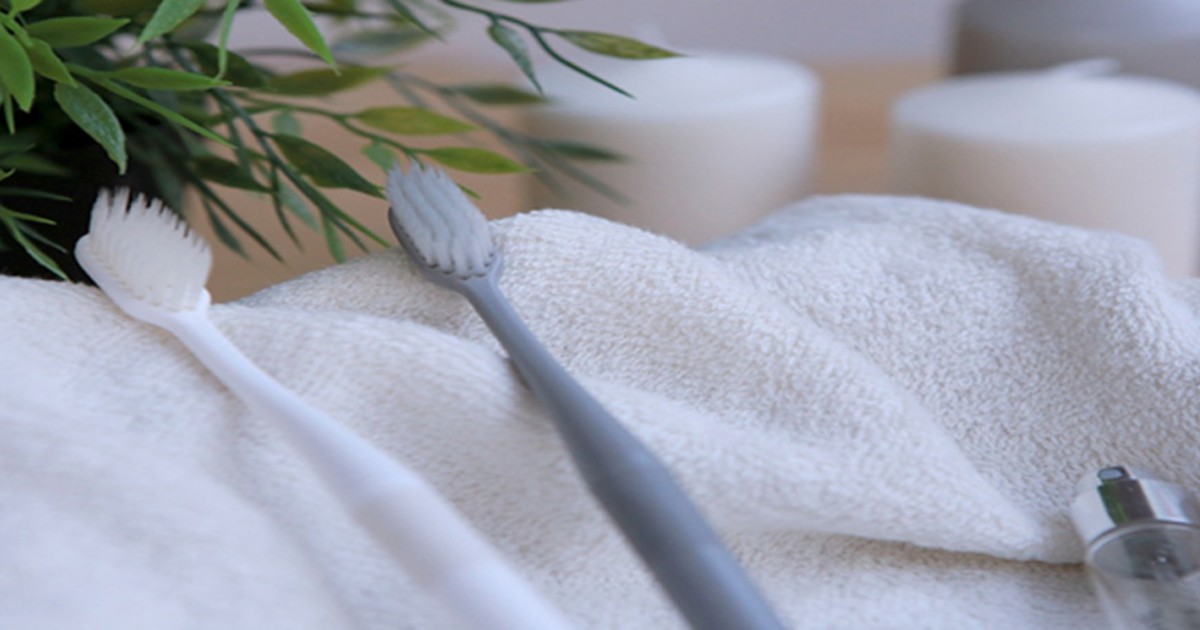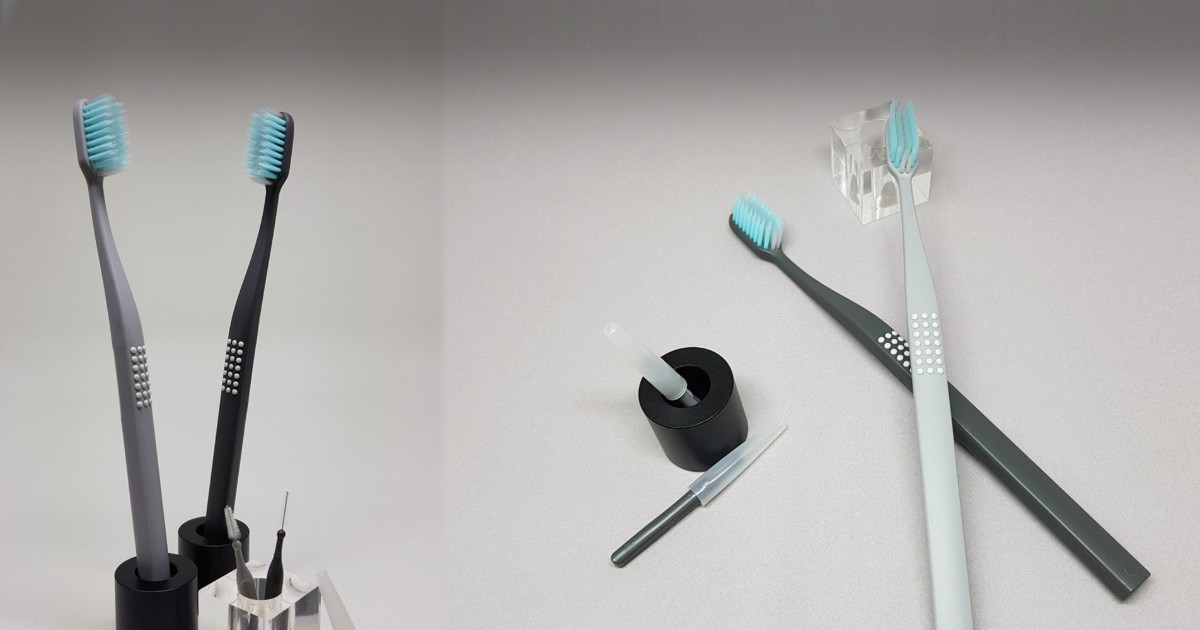
This guide plans a private label orthodontic care kit as two products: a fixed braces kit and a clear aligner kit. Beyond the toothbrush, a braces kit can include interdental brushes, a single-tuft brush and a travel case, and a clear aligner kit can include an aligner case and travel items. To approve the kit, the buyer checks one assembled sample and keeps a signed reference kit to compare with production.
This guide is for dental distributors, orthodontic practices, dental service organizations (DSOs), pharmacy chains and brand owners planning an own-label range. It covers kit structure, components, toothbrush choice, pack information, complete-kit sample approval and the choice between private label and custom OEM development.
Why plan braces and clear aligner kits separately?
In this guide, fixed braces and clear aligners are planned as two separate kits, each built around one appliance.
A braces kit is planned around brushing around brackets and wires. A clear aligner kit is planned around brushing the teeth and storing the trays while they are out. Each kit then gets its own toothbrush, accessory list and pack wording.
Soft bristles as the common baseline
Soft bristles are the shared starting point for both kits. According to the American Dental Association, “the consensus recommendation is for people to brush their teeth for two minutes twice a day with a toothbrush that has soft bristles.” A buyer can use this as the bristle baseline in the specification for both the braces kit and the clear aligner kit.
Trim profile as a design point to compare
Trim profile is the shape of the bristle field seen from the side: flat, multi-level or angled. According to the American Dental Association, “one systematic review found that toothbrushes with either multi-level bristles or angled bristles perform better than the conventional flat-trimmed bristles in removing plaque.” That finding covers manual toothbrush head designs in general, not any specific product. Buyers can treat trim profile as a point to compare across samples, but should not turn this general finding into a claim on their own pack. For more on writing the bristle specification, see Toothbrush Bristle Design: What Brand Owners Should Specify.
Which components belong in each kit beyond the toothbrush?
Each kit should contain only the items its target user will reach for in a normal week. The lists below are planning options, not a fixed bill of materials.
Fixed braces kit
- Interdental brushes: small cylindrical or tapered brushes on a thin wire, designed to fit into gaps between teeth and under orthodontic wires.
- Single-tuft brush: a small brush with one compact tuft of bristles, designed for reaching individual spots such as around a single bracket.
- Travel case: a cover or case so the user can carry the toothbrush to school, work or appointments.
Clear aligner kit
- Aligner case: a rigid case for storing the trays whenever they are out of the mouth.
- Travel items: compact items such as a toothbrush cover or travel pouch for brushing away from home before the trays go back in.
Keeping the component list focused
Check each candidate item with one question: will a person with this appliance use it as part of a normal routine? If an item only makes sense for the other kit’s user, leave it out.
How do you match the toothbrush to each orthodontic care kit?
The toothbrush should match the appliance: an orthodontic toothbrush for the fixed braces kit and a wide-head toothbrush set for the clear aligner kit.
For the braces kit, SANGSI’s orthodontic toothbrush is designed for people wearing fixed orthodontic appliances. For the clear aligner kit, SANGSI’s wide-head toothbrush set is intended for people who use clear aligners. SANGSI’s functional toothbrush range (orthodontic toothbrush for fixed appliances, implant and post-surgical care toothbrush, wide-head toothbrush set for clear aligners) can be supplied to distributors under the distributor’s own label (private label). Each brush belongs to its own kit; do not present one brush as suitable for both users.
Deciding whether a manual-only kit fits the segment
Decide for each kit, before sampling, whether a manual-only kit fits the segment. According to the American Dental Association, “those who have dental appliances, like braces, may find a powered toothbrush easier to use.” Questions that help the decision:
- Is the kit a starter or hand-out kit, or a retail product the user chooses alongside other brushes?
- Does the target user group already tend to own a powered toothbrush, so that a manual kit serves as a travel or spare option?
- Will clinics recommend the kit to a broad patient group, or to a narrower group with specific needs?
If the answer points toward powered brushing, the buyer can still offer a manual kit but should position it clearly, for example as a travel or accessory kit, rather than as the user’s only toothbrush.
What kit and pack information should a buyer prepare?
Before sampling, the buyer prepares a written kit brief that covers:
- Component list: every item in the kit, its colour and its quantity per kit.
- Target user: one clear statement of who the kit is for, either fixed braces or clear aligners, never both.
- Simple use guidance: short steps describing what each item is and when it is used in the routine.
- Replacement guidance: for example, replace the brush as soon as the bristles splay or look worn.
- Branding: logo files, brand colours and the layout for the box, insert and any item-level labels.
- Language versions: every market language required, and whether each version gets its own pack or a shared multilingual pack.
Keep the pack wording to what each item is and who it is for, with no treatment claims.
How should a buyer approve a complete-kit sample?
A buyer approves the orthodontic care kit as one assembled unit rather than as single items. A practical sign-off sequence:
- Component fit in the pack: every item sits in its place, the tray or insert holds it during handling, and the box closes without pressure on the bristles.
- Consistent colours and branding: toothbrush handles, cases and printed parts match the agreed colours and use the same logo version.
- Insert and label accuracy: component list, target user, use and replacement guidance and every language version match the approved text word for word.
- Hands-on check: open the kit as the end user would, and confirm that a clinic can see at a glance which patient the kit is for.
- Signed reference kit: once approved, both sides sign and keep a reference kit so production can be compared with the same physical standard.
Record any change made after sign-off and approve a new reference kit if the change affects fit, colour or printed text.
Private label or custom OEM development: which route fits the kit?
The two routes for the kit’s toothbrush are private label of an existing functional design and custom OEM development. SANGSI Co., Ltd. is an oral care manufacturer based in South Korea. SANGSI offers OEM and private label toothbrush manufacturing for brand owners and distributors.
- Private label of existing designs: the buyer selects an existing functional toothbrush, such as SANGSI’s orthodontic toothbrush for the braces kit or SANGSI’s wide-head toothbrush set for the clear aligner kit, and adds its own branding and packaging.
- Custom OEM development: the buyer and manufacturer develop a new specification, such as a new handle, head or bristle layout, through briefs, samples and approvals. The steps are described in How Toothbrush OEM Development Works: From Brief to Sample.
What to share in the first inquiry
Include the following in the first inquiry to the manufacturer:
- Which kit or kits are planned: fixed braces, clear aligners or both as separate products.
- The preferred route: private label of an existing design or custom development.
- The draft component list, marking which items the buyer expects the manufacturer to supply and which it will source elsewhere.
- Target markets and required language versions.
- Branding assets and the intended pack format.
- Where the kit will be offered, such as clinics, pharmacies or direct to consumers.
For building a wider own-label range around functional toothbrushes, see How to Build a Specialty Toothbrush Line Under Your Own Label.
Summary
- Plan fixed braces and clear aligner kits as separate products, with soft bristles as the shared baseline and trim profile as a design point to compare.
- Keep each component list focused on its user: interdental brushes, a single-tuft brush and a travel case for braces; an aligner case and travel items for clear aligners.
- Match the toothbrush to the appliance and decide per segment whether a manual-only kit fits.
- Prepare a written kit brief covering components, target user, use and replacement guidance, branding and languages, without treatment claims.
- Approve the complete kit as one unit and keep a signed reference kit for production checks.